Vieux-Montréal
Neighbourhood guide

Vieux-Montréal

Four centuries of stone beside the river

Ville-MarieMontréal82 spots
The vibe

Cobblestones underfoot, grey stone and steeples overhead. In the morning, Old Montreal belongs to delivery trucks and river mist; by evening, to lanterns and long dinner tables. Between Place d’Armes and the Old Port, every side street compresses four hundred years of history into a few strides, and the St. Lawrence keeps carrying the smell of open water up to the facades.

4
UGO signatures
31
See & discover
22
Where to eat
15
Drink & nightlife
10
Activities & wellness

Good to know

  • 1Follow the river along the Old Port promenade rather than rue de la Commune — same route, more air and light.
When to go
Early weekday mornings for crowd-free cobblestones, or evenings when the lanterns come on. Under winter snow, the district recovers a rare calm.
Getting there
Orange line, Place-d’Armes or Champ-de-Mars stations. Ten minutes on foot from downtown; by bike, the Berri path runs straight down to the Old Port.
The story

How the neighbourhood came to be

This is where Montreal begins: in 1642, Ville-Marie was founded at Pointe-à-Callière, between the river and a small stream now buried underground. The district later became the country’s financial heart — Saint-Jacques Street was long nicknamed the Wall Street of Canada — before falling quiet, then reviving from the 1960s onward under heritage protection. The colonnaded banks now house hotels and offices, but the street grid itself dates back to the French regime.

Did you know?

  • 1Several of today’s streets, including Saint-Paul, were laid out as early as 1672 by Sulpician priest François Dollier de Casson.
  • 2Bonsecours Market briefly housed the Parliament of United Canada after the parliament building burned down in 1849.
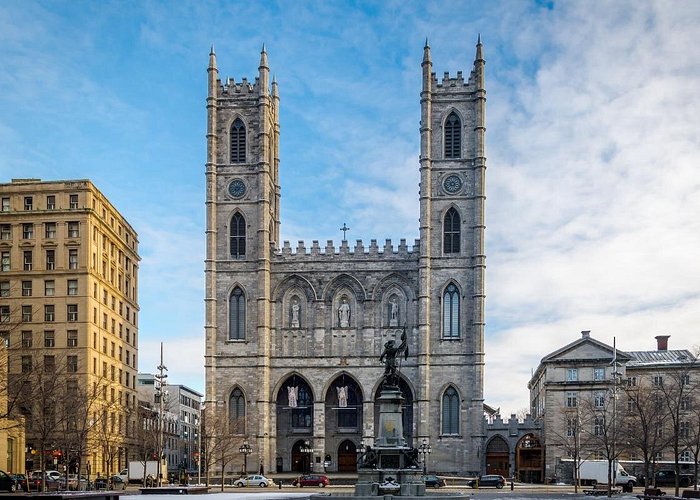
  • 3Notre-Dame Basilica’s great bell, named Jean-Baptiste, weighs over ten tonnes, among the largest bells in North America.
4 experiences

UGO signatures

UGO Signature

Coucher de soleil au Vieux-Port

When the sun sinks behind the skyscrapers, the Old Port quays become one of the most pleasant places in the city. Sit on a bench facing the river, watch the sailboats return to the basin and the silhouettes of strollers stretch across the cobblestones, while the low light sets the grey stone facades of downtown ablaze. Behind you, the Clock Tower has watched over the St. Lawrence since **1922**; ahead, Île Sainte-Hélène slowly darkens. No ticket required, only a little time, and maybe an ice cream cone picked up along the way. Insider tip: the best viewpoints are at the far end of the Clock Tower Quay, where the river opens wide and the crowd thins out.

Discover
UGO Signature

Flâner dans le Vieux-Montréal au petit matin

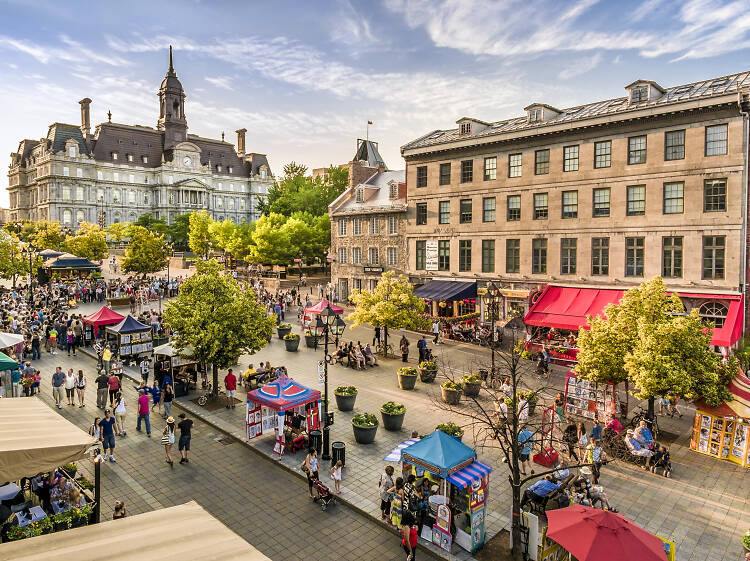
There is a magic hour when Old Montreal still belongs to early risers: before 9 a.m., when the horse carriages are asleep and the shops haven't rolled up their shutters. Start at Place d'Armes, walk down Saint-Paul Street (the city's oldest, laid out in **1672**) and let the cobblestones set the pace. The grey stone facades tell three centuries of trade, faith and fires; Notre-Dame Basilica appears around a bend, still silent. Every alley sloping toward the river offers its own escape of light. This is the Montreal of origins, with no lineups and no photographer's tripod. Insider tip: step into the inner courtyard of Bonsecours Market, then follow De la Commune Street on the river side for the city-water contrast.

Discover
UGO Signature

Longer le fleuve au Vieux-Port

Step out of Saint-Paul street's grey stone maze and the river opens up all at once: the moment Old Montreal stops being a set and becomes a port again. You walk east along the quays — Jacques-Cartier, King-Edward, the Clock Tower — freighters climbing the St. Lawrence on one side, the Bonsecours dome on the other. Two flat kilometres, windy in every season, punctuated by benches and seasonal terraces. The best antidote to a morning of heritage overload, and the only stretch of the day where you physically grasp why the city settled here.

Discover
UGO Signature

Se faire flotter sur un ancien traversier

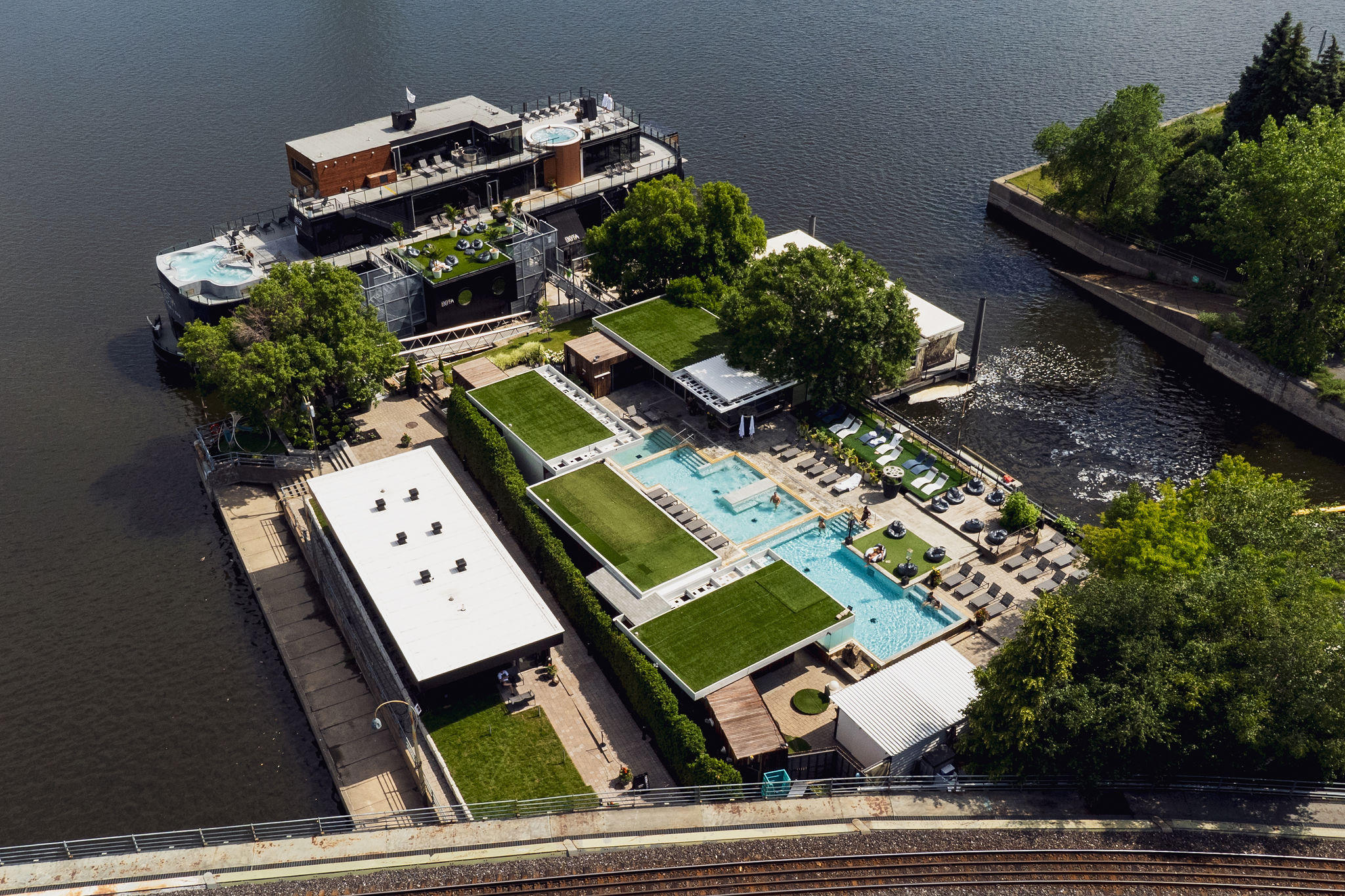
In the 1950s, this boat ferried passengers between Sorel and Berthier; today, moored at the mouth of the Lachine Canal, it has become Quebec's most singular spa. The Bota Bota ritual comes down to three words: hot, cold, rest, repeated across five decks: a sauna with portholes onto the river, whirlpools on the upper deck, silent rooms where you doze facing the grain silos and Habitat 67. Winter is paradoxically the best season: steam on your face, hair freezing, the white city all around. You leave feeling like you've travelled without ever leaving the Old Port. Insider tip: book an evening slot on a weekday, when the boat empties out and the downtown lights reflect on the water.

Discover
On the map

The neighbourhood at a glance

UGO signaturesSee & discoverWhere to eatDrink & nightlifeActivities & wellness
31 spots

See & discover

22 spots

Where to eat

15 spots

Drink & nightlife

10 spots

Activities & wellness

Experiences

Book something to do

Resources

Useful links

Want to explore further?

UGO© 2025
How it worksEspace proEventsAboutContactPhoto credits