
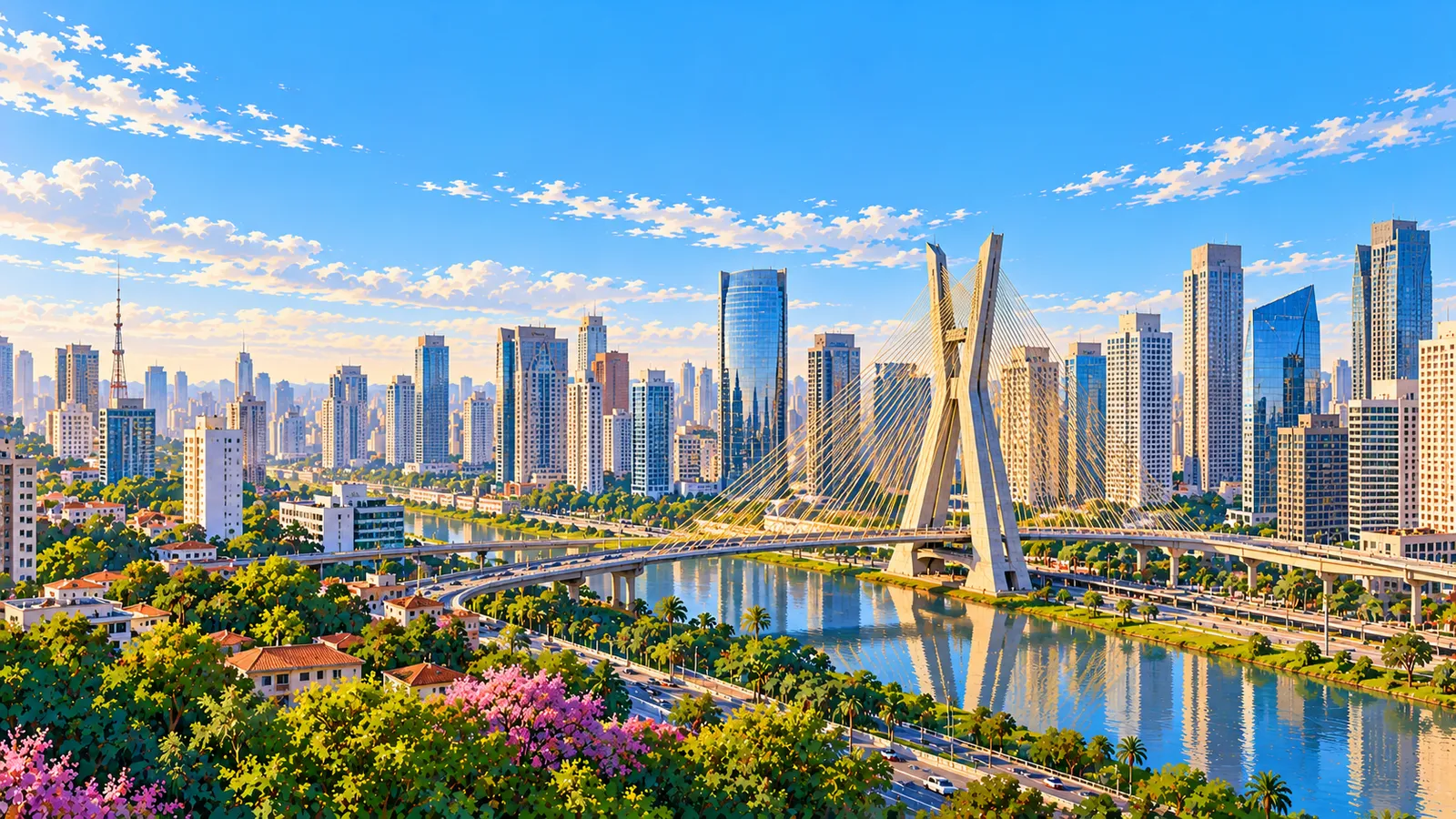
ounded in 1554 by Jesuits on a plateau, São Paulo long remained a small frontier town. In the 19th century, coffee, its “green gold”, turned it into Brazil’s economic engine and drew immigrants from Italy, Japan, Lebanon and elsewhere.
Today South America’s largest city moves to the rhythm of its neighbourhoods: Vila Madalena’s graffiti-covered walls, Liberdade’s red lanterns, Pinheiros’s galleries and bars. On Sundays, Avenida Paulista goes car-free and Ibirapuera Park fills with families.